DENTAL IMPLANT
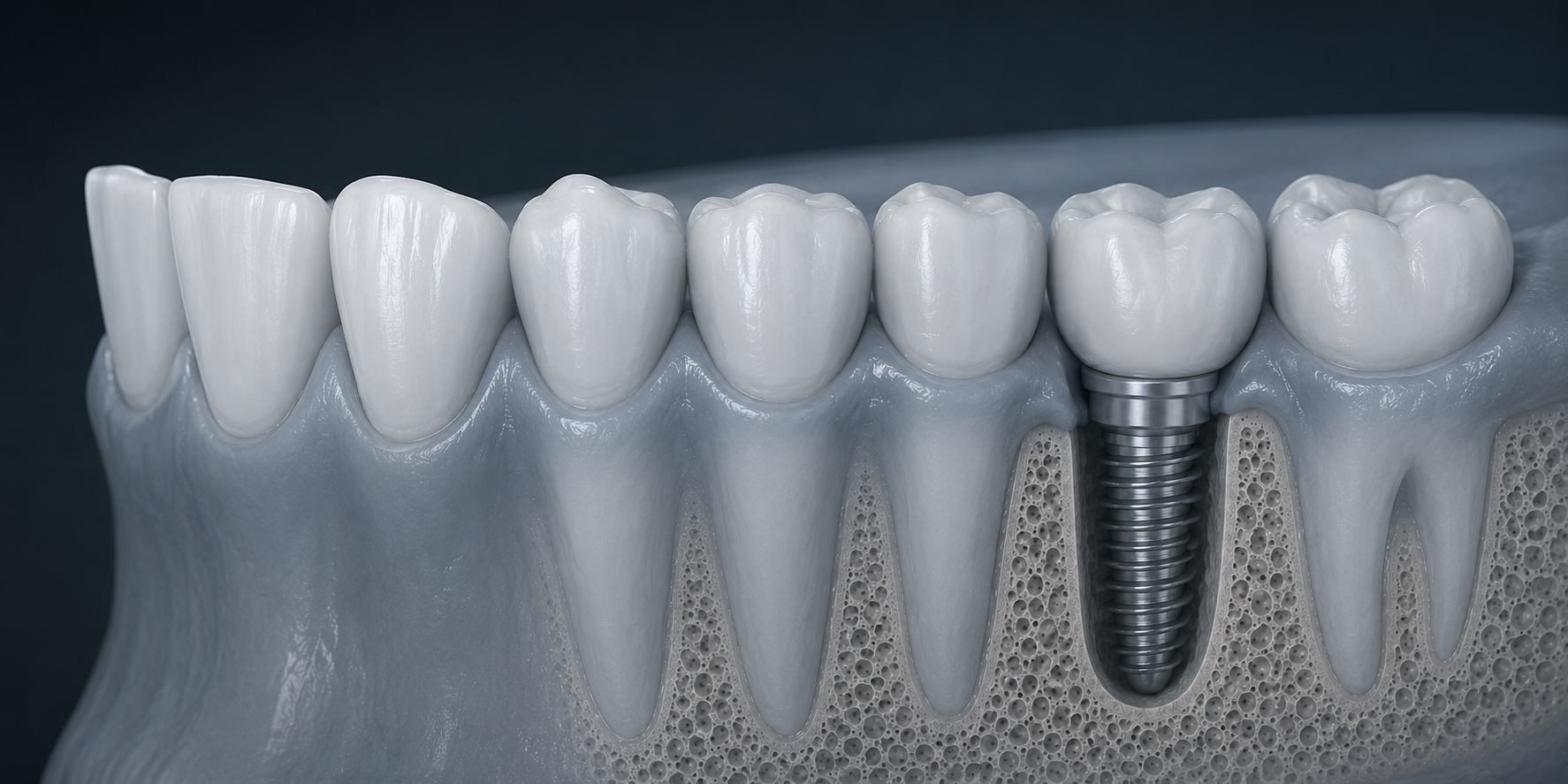
Dental Implants: A Permanent Solution for Missing Teeth
Modern dentistry offers a variety of solutions for replacing missing teeth. However, for patients seeking a long-term, natural-looking, and functionally superior option, dental implants stand out as the first choice. Denta-joy clinics leverage cutting-edge technology and experienced practitioners to provide patients with a seamless dental implant experience, restoring both aesthetics and functionality to their smiles.
Advantages of Dental Implants:
- Enhanced Aesthetics: Dental implants are surgically placed into the jawbone, mimicking the natural root structure of a tooth. This provides a stable foundation for a custom-crafted dental crown, resulting in a replacement tooth that seamlessly integrates with your existing smile.
- Improved Functionality: Unlike dentures or bridges, which can slip or require adjustments, implants function just like natural teeth. Patients can enjoy a wider variety of foods and experience a more natural biting sensation, leading to increased confidence in everyday activity and life exposure.
- Long-Term Investment: Dental implants are crafted from biocompatible materials designed for long-term durability. With appropriate care, they can last for decades, offering a cost-effective solution compared to frequently needing to replace dentures or bridges.
- Preserved Oral Health: Traditional methods of replacing missing teeth, such as dentures, can contribute to bone loss in the jaw. Dental implants, by integrating with the jawbone, help to prevent this issue and maintain a healthy oral foundation easily.
JUST LIKE NATURAL
TEETH
Dental Implants: To replace a missing teeth by using a natural choice
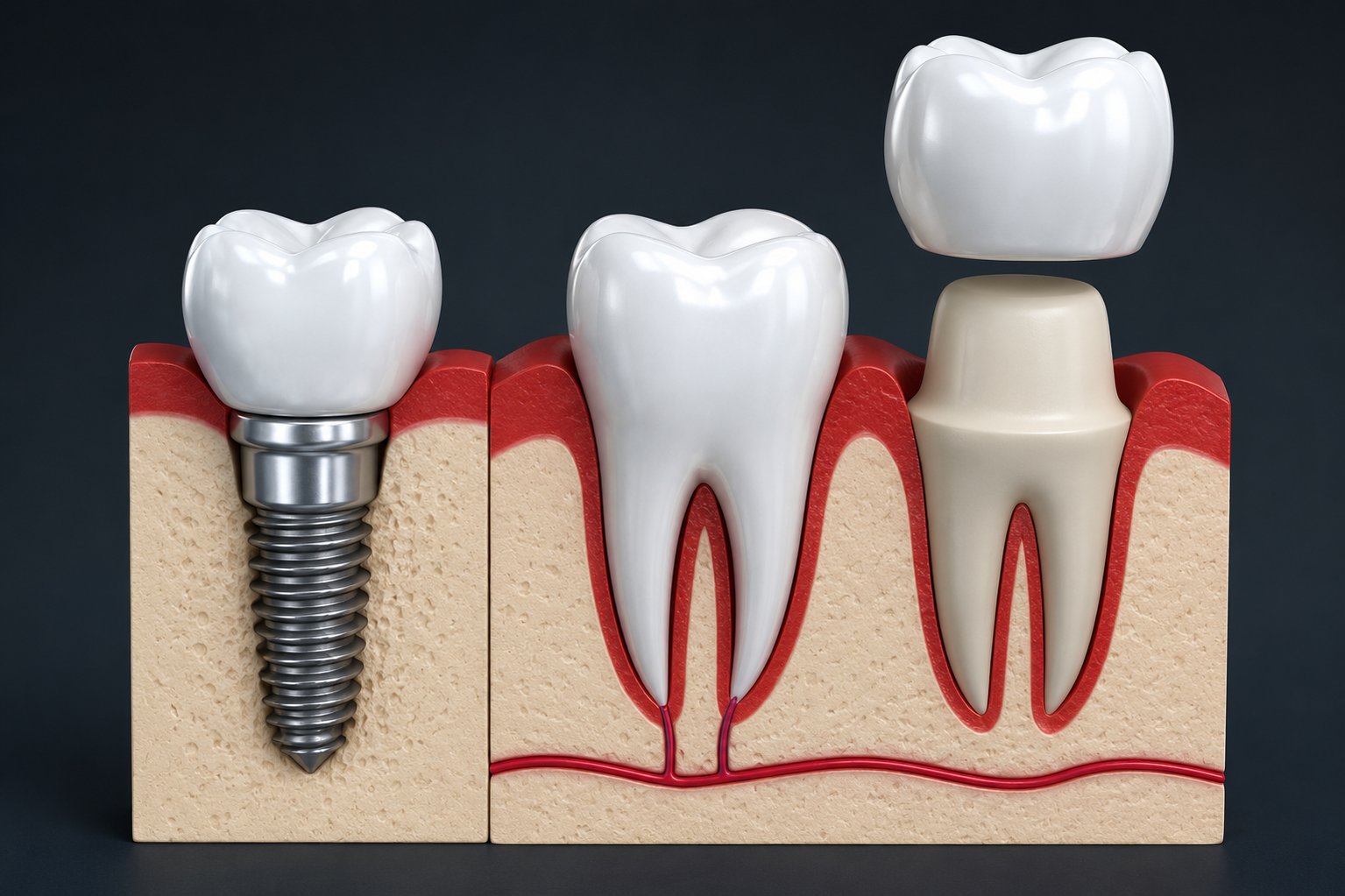
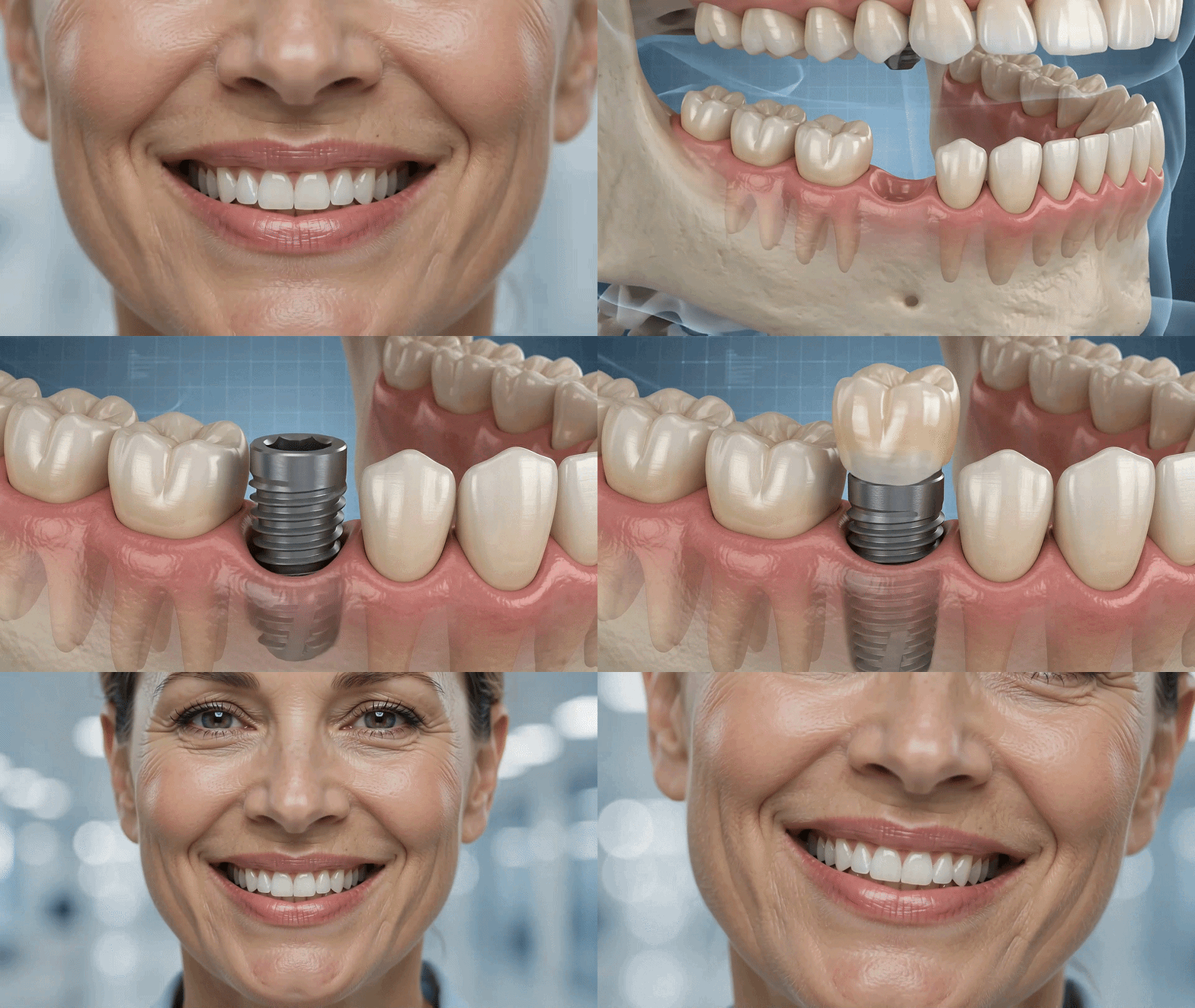
Dental implants offer a revolutionary solution for replacing missing teeth, mimicking the look, feel, and function of natural teeth. They consist of two key parts:
- Titanium Root: Made from biocompatible titanium, the implant acts as an artificial tooth root, securely anchoring into your jawbone. This provides a stable foundation, unlike dentures or bridges that can slip or cause discomfort.
- Custom Crown: A custom-crafted crown is attached to the implanted root, replicating the natural shape and color of your surrounding teeth. This ensures a seamless and aesthetically pleasing result.
Benefits of Dental Implants:
- Unmatched Stability: Unlike dentures, implants are permanently fixed within the jawbone, eliminating the need for adhesives or messy adjustments.
- Natural Function: Implants function just like your natural teeth, allowing you to enjoy a wider variety of foods and experience a more natural biting sensation.
- Long-Term Durability: Crafted from high-quality materials, implants are designed to last for decades with proper care, making them a cost-effective solution in the long run.
- Preserves Oral Health: Traditional options like dentures can contribute to bone loss in the jaw. Implants actually stimulate and preserve jawbone health.
- Enhanced Confidence: With a natural-looking and fully functional smile, dental implants can boost your confidence in social interactions and everyday life.
Are Dental Implants Right for You?
If you’re missing teeth or struggling with uncomfortable dentures, dental implants may be the perfect solution. Our experienced implantologists can assess your individual needs and determine if implants are a suitable option.
What is a dental implant?
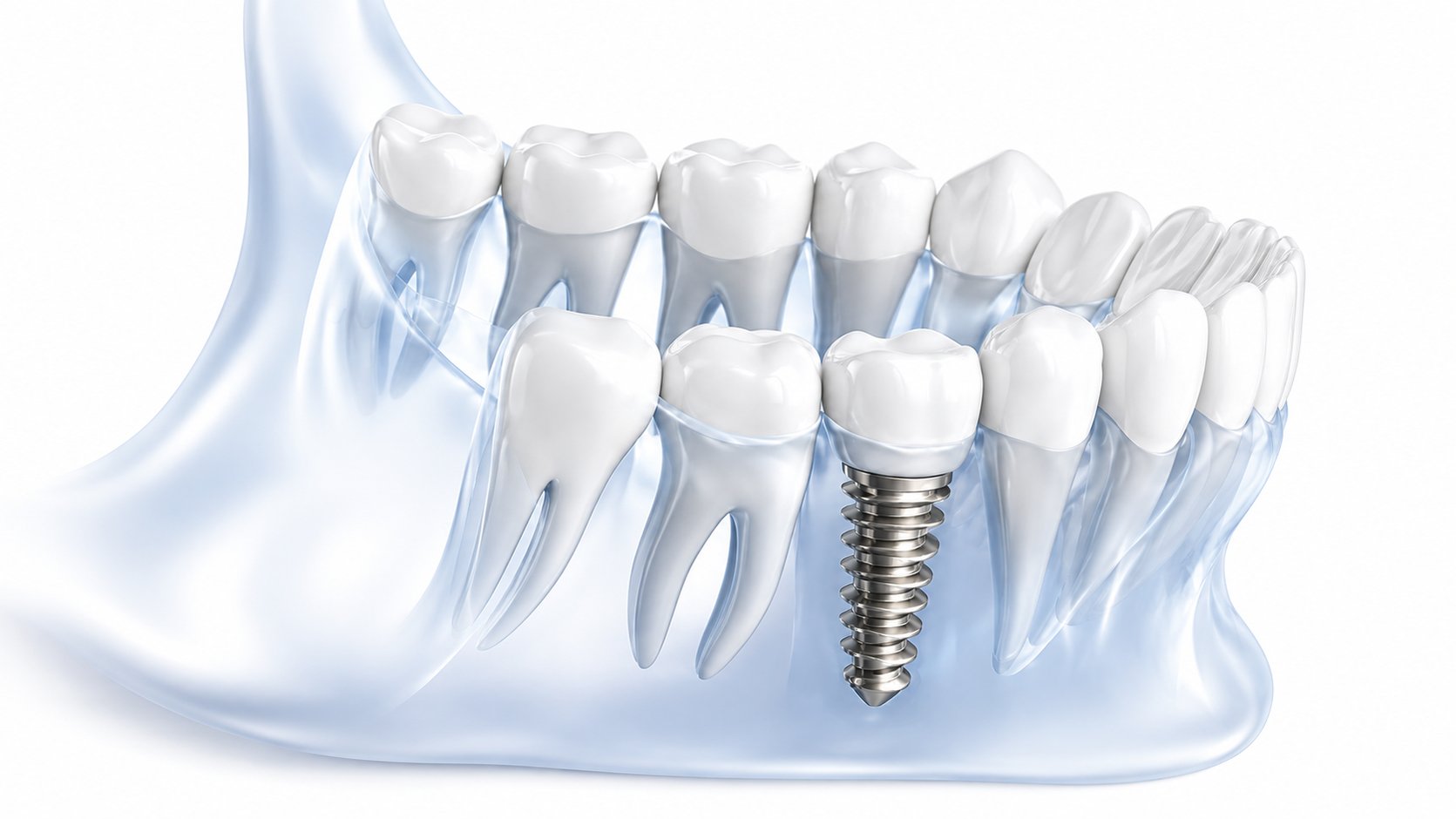
Dental implants are a revolutionary tooth replacement option designed to mimic the function and aesthetics of natural teeth. They consist of three main parts:
- Fixture: Made of biocompatible titanium, the implant fixture acts as an artificial tooth root. Surgically placed in the jawbone, it fuses with the bone over time through a process called osseointegration, providing a strong foundation for the replacement tooth.
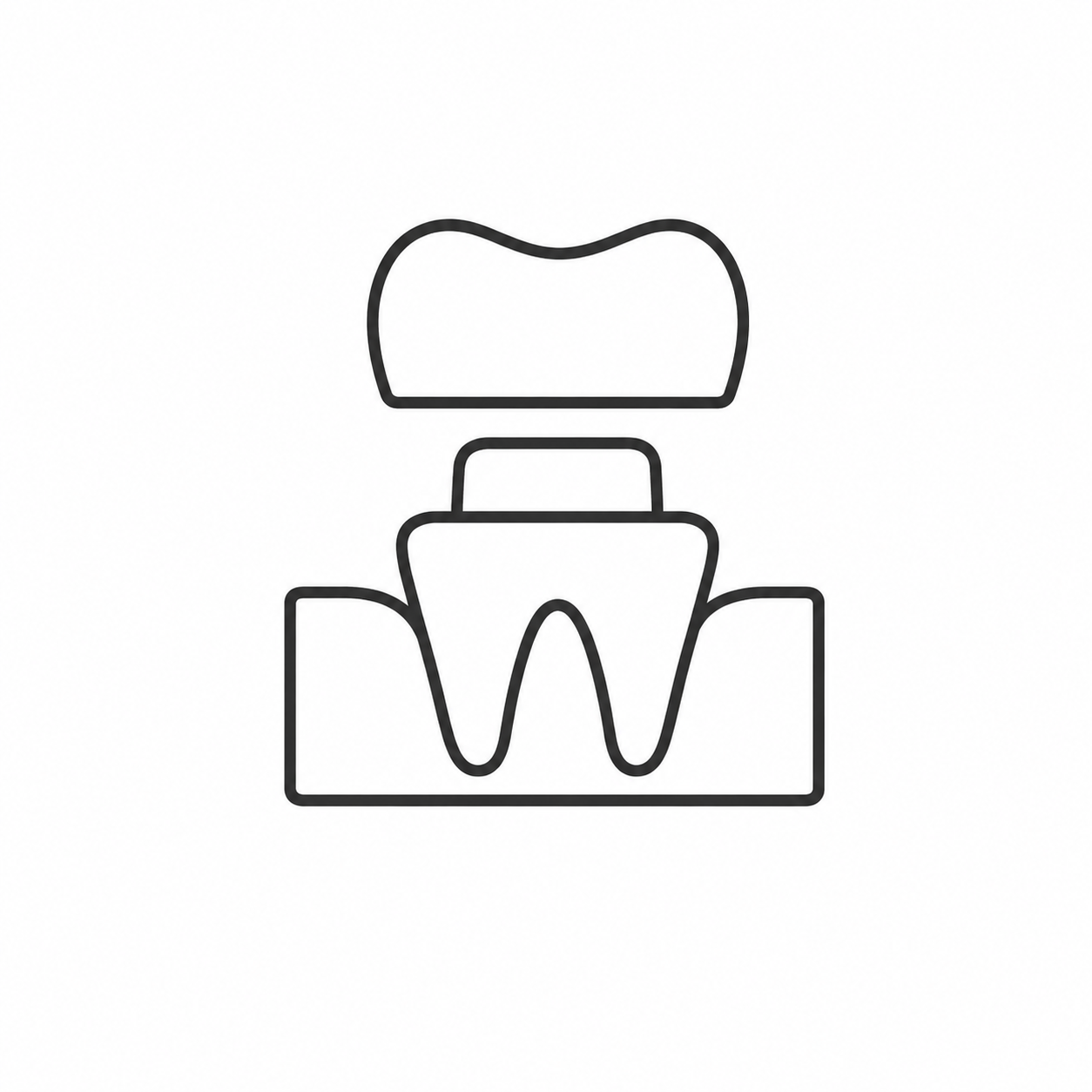
- Abutment: The abutment is a small connector piece that attaches to the implant fixture once it’s healed. It extends above the gum line and serves as a bridge between the implant and the artificial tooth.
- Crown: The crown is the visible portion of the implant, custom-made from tooth-colored ceramic to perfectly match your surrounding teeth. It’s securely fastened to the abutment, restoring both aesthetics and functionality.
Type of implant
1. Immediate Dental Implants:
This method involves placing the implant post immediately after extracting a tooth. It’s ideal for situations where the jawbone is healthy and sufficient for immediate support. However, not all cases qualify for this approach.
2. Dental Implants with Immediate Crowns:
This treatment involves placing the implant post and attaching a temporary or permanent crown on the same day. Temporary crowns are typically used while the implant integrates with the jawbone. The dentist will determine if a permanent crown can be placed immediately based on individual factors based on their oral health.
3. Conventional Dental Implants:
This is the most common method. It involves a two-stage process:
Stage 1: The implant post is placed in the jawbone.
Stage 2: After a healing period (usually several months) to allow for osseointegration (fusion between implant and bone), a permanent crown is then attached.
GETTING STARTED : Dental Implant

STEP 1
See a dentist for a consultation.
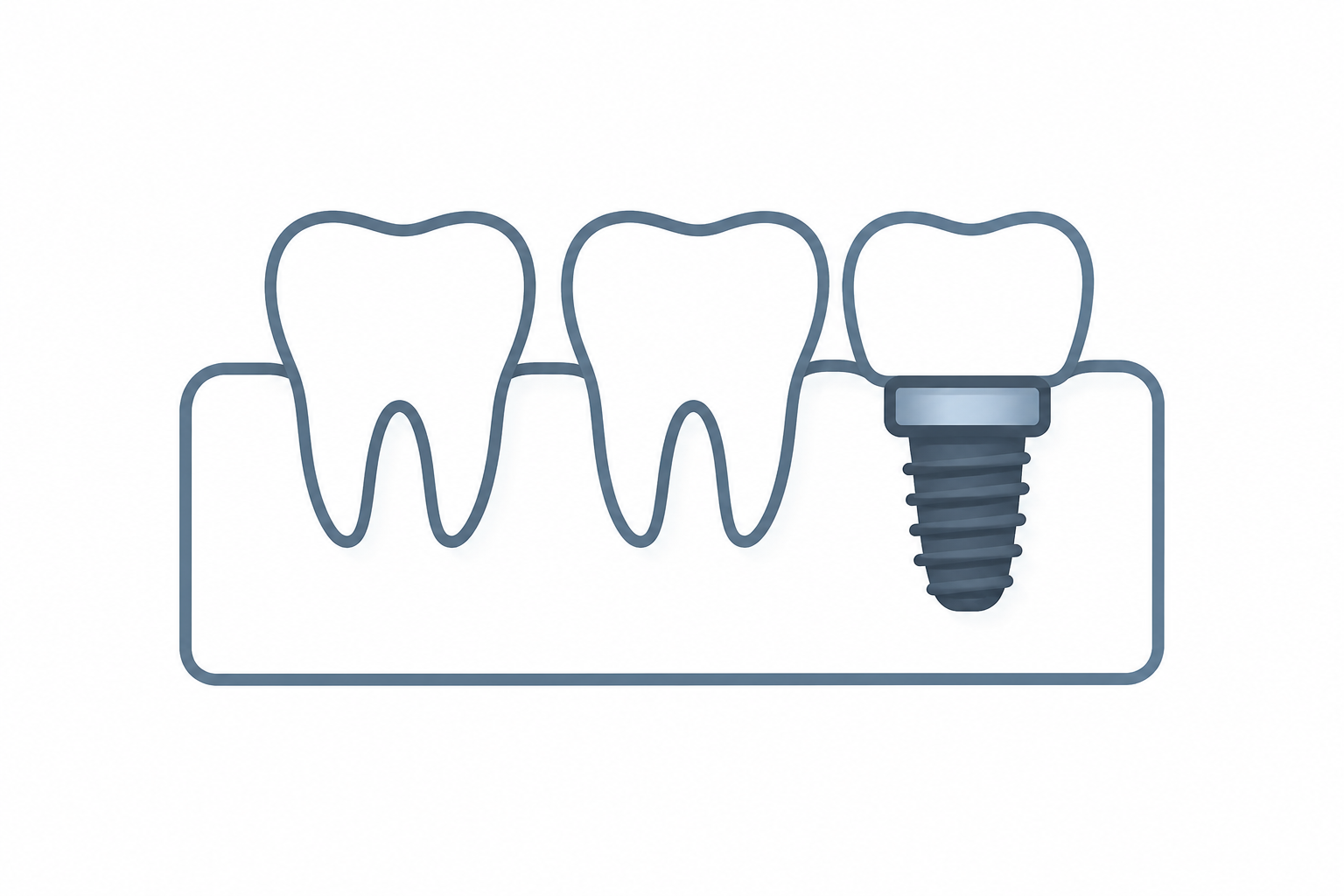
STEP 2
Dental implants, sutures
STEP 3
Make a silk cut

STEP 4
Proceed with typing the mouth.
STEP 5
Do the insertion and fixing the tooth crown firmly with the implant
STEP 6
Follow up on treatment results as prescribed by the dentist
Dental Implant Treatment Process: A Step-by-Step Guideline
1. Consultation and Planning:
- X-rays and Scans: Your dentist will use X-rays or CT scans to assess your jawbone health, gum tissue thickness, and the location of nerves and blood vessels. This helps determine if implants are suitable and plan the implant size, number, and placement.
2. Implant Placement Surgery:
- Local Anesthesia: You’ll receive local anesthesia to numb the area.
- Tooth Extraction (if necessary): If the implant site has a damaged tooth, it will be extracted.
- Implant Placement: The dentist will create a small incision in the gum and carefully drill a hole in the jawbone. The implant post (artificial root) is then surgically inserted into the prepared site.
- Stitches and Healing: The gum tissue will be stitched closed to promote healing. You’ll likely experience some swelling and discomfort for a few days, but pain medication can help manage these symptoms.
3. Osseointegration (Healing Period):
- Fusion with Jawbone: This is a critical stage where the implant integrates with the jawbone through a process called osseointegration. The duration of this period can vary from 3 to 6 months, depending on individual factors and their health condition.
4. Abutment Placement:
- Once the implant is fully integrated: Your dentist will remove the healing cap and place an abutment on the implant. This small connector piece serves as a bridge between the implant and the artificial tooth.
5. Crown Placement:
- Creating the Crown: Impressions of your mouth and the surrounding teeth will be taken to create a custom-made dental crown. This crown will match the size, shape, and color of your natural teeth for a seamless look.
- Attaching the Crown: The final crown will be securely attached to the abutment, completing the dental implant restoration.
6. Follow-Up Care:
- Regular Checkups: Regular dental visits are crucial to ensure the health of your implants and surrounding teeth. Your dentist will typically recommend checkups every 6 months or as needed.
Remember, this is a general overview. The specific steps and timeline may vary depending on your individual case and the type of implant used.
Please always consult with your dentist to discuss your personalized treatment plan.
Factors for Successful Dental Implants:
- Strong Gums and Jawbone: Healthy gums and sufficient jawbone density are essential for implant placement and long-term success.
- Bone Grafting: If your jawbone is too thin or weak, a bone graft procedure can be performed to add volume and create a strong foundation for the implants.
- Sinus Lift: In the upper jaw, if the sinus cavity is too close to the jawbone, a sinus lift surgery may be needed to create space for implant placement.
Your dentist will thoroughly evaluate your jawbone health and discuss any necessary procedures like bone grafting or sinus lifts before your implant treatment starting.
ADVANTAGES
- Boosts confidence and improves personality. If there are missing teeth, one may you lose confidence in yourself.
- Dental Implants fill out spaces lowering risk of cavities.
- Restores chewing ability and function. The implants will replace the structure of the loss tooth/teeth..
- Improved speech.
- Reduce the anxiety brought by frequent dislocation and instability of dentures.
LIMITATIONS
- Can be a little costly compared with dentures.
- Not advisable for young patients who are still growing.
- Patients with Osteoporosis should have clearance from his/her physician, due that Osteoporosis affects survival of dental implants.
- People with certain medical conditions such as uncontrolled type of diabetes or cancer patients must be pre-evaluated.
- Patient who are regular smokers have higher risk of treatment failure.
Dental implants and crowns The price will be 30 lakh – 55 lakh per tooth depending on the condition of the teeth and the discretion of the specialist doctor.
FAQ : Dental Implant
Who are dental implants for?
Dental implants are for anyone who lacks the confidence to smile because of missing or broken teeth, or for people who are tired of the restrictions of dentures. For the implants to be successful, you need a healthy jawbone and gums. However, our specialists can first build up your jaw with bone grafts if necessary. Kindly please make an arrangement for a consultation with our dedicated and professional implantologists who can advise you on whether you are eligible for implants.
Why should I get dental implants?
If you lack confidence because you have spaces in your smile from missing or broken teeth, if you have no natural teeth left, or if you are tired of cumbersome and awkward dentures, you are a perfect candidate to benefit from dental implants. If you want to smile with confidence once more, or if you don’t want teeth that impair your quality of life because they don’t fit well, feel uncomfortable, or prevent you from eating all your favorite foods, you should consider the life-changing benefits of dental implants.
What are dental implants?
Dental implants are long-lasting replacements for missing or broken teeth. Unlike dentures that have to be removed, cleaned and glued, dental implants are permanently fixed in place, making them both look and feel like natural teeth. A small cylinder is set into the jawbone in much the same way as the original tooth root, and a crown is then attached to replace the missing tooth or teeth. The root is made from titanium which has the highest compatibility rate with the human body and each crown is carefully designed to replicate the original tooth in both appearance and function so that it will look and feel like a natural tooth.
What is the process?
The process can be divided into two easy and painless phases. First the new root is fixed into the jawbone. Once the replacement root has healed and is strong enough, the crown is attached and the implant is complete. Follow up visits are then scheduled just to monitor the new implant to ensure that it fits, looks and functions perfectly.
How long does the process take?
With the advancements in dental technology and the expertise and experience of our implantologists, the whole process can be completed in one day if the immediate load option is deemed the best choice for you. For those who are more suited to the conventional method, the first phase is to implant the titanium root, and this takes between two and three hours. Once the new root has healed and is strong enough, the crown is attached. This is usually three to six months later. With both options, we then arrange periodical follow up visits after 1, 3 and 6 months to monitor the implant.
How long do the implants last?
Dental implants are permanent replacements for your natural teeth. The new root is designed to last a lifetime, although the crown may need to be replaced after ten to fifteen years. You can extend the life of your implants by treating them just like natural teeth by brushing, rinsing with mouth wash and flossing to keep the implant and gums healthy.