
Restorative & Endodontic Dentistry

WHY YOU NEED A PROSTHODONTIST?
The complete smile of the people is saved. Performed by specializing dentists, Veneers aesthetically improves teeth to look better and more presentable, while bridges, caps/crowns normally restore function such as chewing and obtaining a balanced smile. Dental Implants will alter tooth/teeth loss for both function and aesthetics purposes.
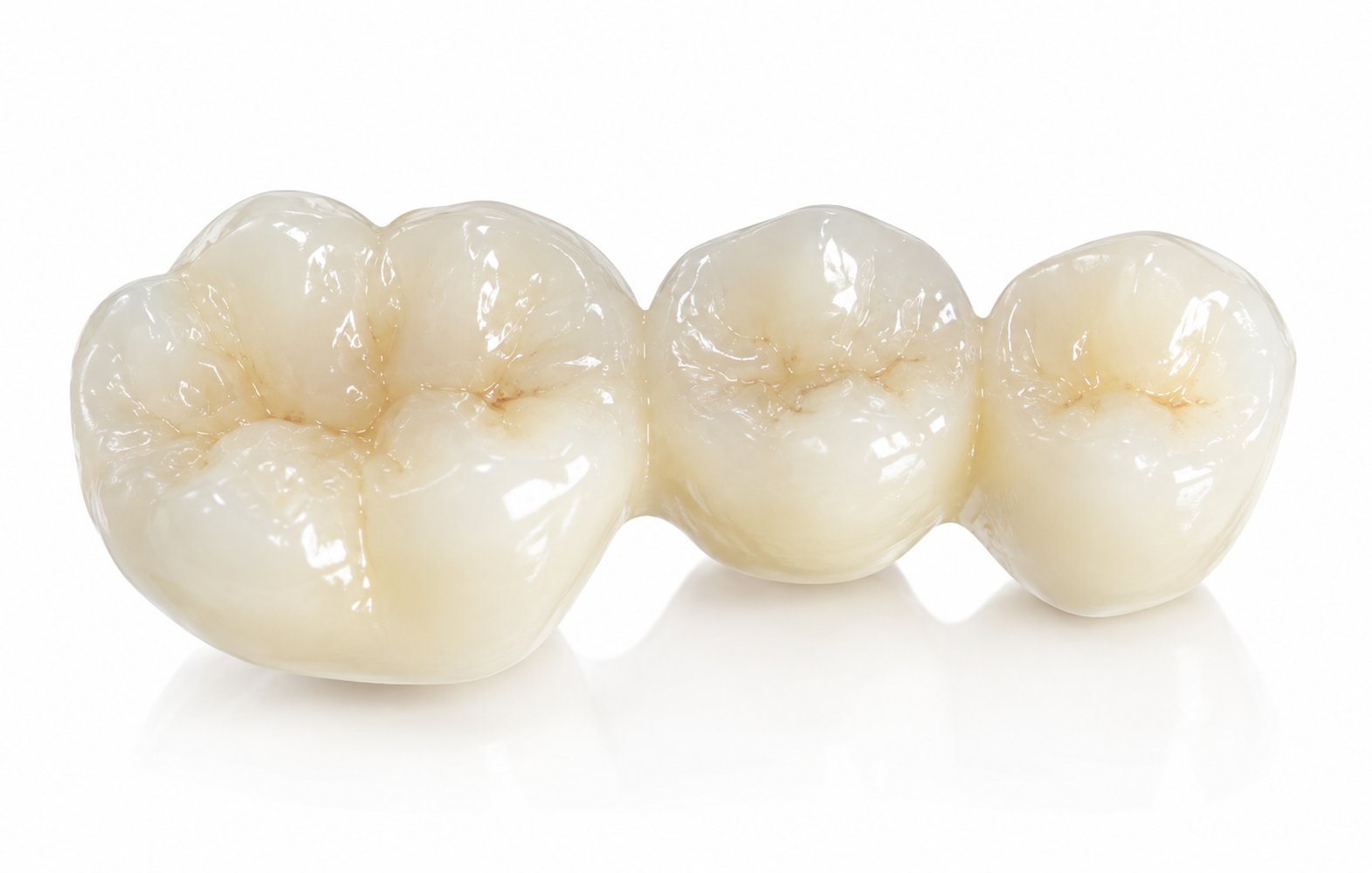
BRIDGES
Traditional methods to replace a missing tooth or teeth include the fabrication of a bridge. To replace a missing tooth with a bridge, at least one tooth on either side of the space created by the missing tooth must be prepared for a crown. Then a false tooth is joined to the crowns, and the entire structure is cemented to the prepared teeth. The patient cannot remove the bridge, and special aids are available to keep it clean.
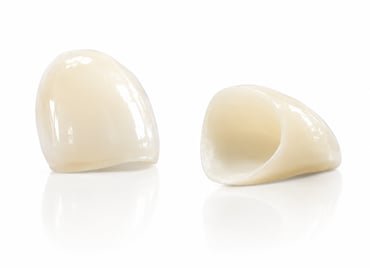
CROWNS/CAPS
Crowns cover or “cap” a tooth to restore the normal function and appearance of the tooth. Crowns may be made as all metal, porcelain fused to metal or all-ceramic (porcelain). Crowns are indicated for teeth with very large fillings, teeth that have had a root canal, fractured teeth and misshapen and/or discolored teeth.
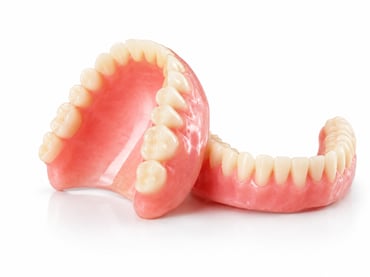
DENTURES
When a patient no longer has any natural teeth, complete dentures are the traditional method to restore function and appearance. Many patients experience difficulty wearing conventional dentures because of poor stability and decreased chewing function. The use of dental implants to improve the stability and retention of dentures is becoming quite popular.
With or without teeth, your mouth slowly changes as you age. But people who have no teeth on average lose 1/3 mm of jawbone height each year. Sometimes that loss is greater due to certain medical conditions such as osteoporosis. As our jawbone shrinks, so do our gum tissues (sometimes referred to as ridges). Ridges can shrink up to a quarter-inch in 10 years!
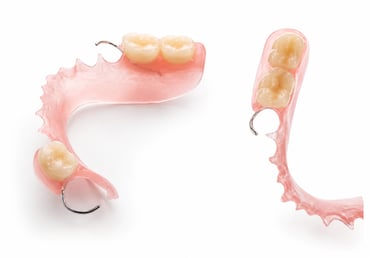
REMOVABLE PARTIAL DENTURES
When there are multiple missing teeth, weak anchor teeth or no posterior teeth to anchor on, a removable partial denture is used to replace teeth. These restorations typically are made of a metal framework and a plastic base with teeth. They must be removed for daily cleaning and at night.
DENTAL IMPLANTS
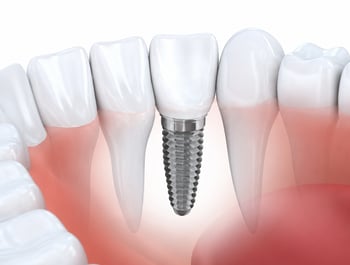
Today’s dental implants are typically made of titanium and may be parallel-sided or tapered and may or may not have threads. These fixtures are placed into the jawbone and allowed to heal until they are “integrated” into the bone. Dental implants may be used to replace one, many or all of a patient’s teeth.
VENEERS
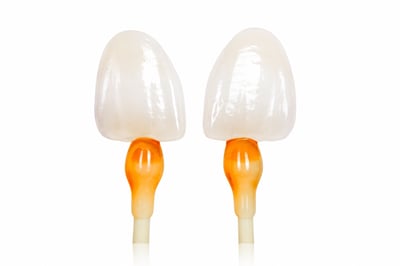
Porcelain veneers are used to modify the shape and color of teeth. Veneers are thin shells of porcelain that are etched and then bonded to the enamel of the teeth. Tooth preparation is necessary to avoid over bulking of the tooth, but it is limited to the enamel and usually involves only a few surfaces of the tooth.
ENDODONTICS
(Root Canal Treatment)
WHAT IS ROOT CANAL?
Nothing is as good as a natural tooth! And sometimes your natural tooth may need root canal (endodontic) treatment for it to remain a healthy part of your mouth. Most patients report that having root canal (endodontic) treatment today is as unremarkable as having a cavity filled.
Teeth are held in the jaw by their roots. Inside each tooth is the “pulp” or “nerve” which supplies nourishment and sensation to the tooth. Root canals are very small, thin canals that branch off from the pulp chamber down to the tip of the root. A tooth has at least one but no more than four root canals.
When the pulp or root canal is diseased or injured, it “dies”. If you don’t remove the dead tissues your tooth gets infected and you could lose it. Inflamed or infected pulp (pulpitis) most often causes a toothache. To relieve the pain and prevent further complications, the tooth may be extracted (surgically removed) or saved by root canal treatment.
Root canal treatment is a dental procedure in which the diseased or damaged pulp (core) of a tooth is removed and cleaned out of any infection in the pulp and root canals.The inside areas (the pulp chamber and root canals) are filled and sealed.

WHAT ARE THE SIGNS OF NEEDING ENDODONTIC
TREATMENT?
- Prolonged sensitivity to heat or cold
- Spontaneous pain or throbbing of the tooth
- Pain while biting or chewing
- Tenderness to touch and chewing
- Drainage and tenderness in the lymph nodes as well as nearby bone and gingival tissues.
- Deep cavity
- Cracked, chipped or split tooth
- Discoloration of the tooth
- Gum (periodontal) disease
- Trauma, such as a sudden blow to the mouth
- For many damaged pulps or root canals there are no symptoms. Your dentist may discover a “dead” tooth in an x-ray.
WHAT MAKES A ROOT CANAL NECESSARY?
Regardless of the initial cause, the tooth pulp becomes irritated and infected. Bacteria grows within the tooth pulp, causing pressure and if a cavity forms and is allowed to go untreated for too long, it can penetrate to the root pulp where and infection can occur pain, sometimes accompanied by swelling of the face. Sometimes the deterioration of the pulp happens so gradually that little pain is felt. Regardless of the amount of pain felt, eventually the bacteria can destroy the pulp.
WHAT WILL HAPPEN IF YOU LEAVE THE TOOTH UNTREATED?
- The tooth will not heal by itself
- Pain will worsen
- The infection will cause swelling that may spread to other areas of the face, neck or head
- Bone around the tooth will begin to degenerate
- Swelling with pus will form in the area around the tooth root, called an abscess
- The tooth may fall out
- Possibility of losing the tooth.
If a tooth has an abscess it can firstly cause severe pain, but not always. Some abscesses can be surprisingly painless. Nevertheless, the infection at the root tips can spread into the surrounding bone and soft tissues and cause more serious infections there that could cause swelling and pain. Bacteria also enter the blood stream and can infect other parts of the body. Prosthetic hip and knee joints and heart valves are particularly prone to infection. Patients with other health problems could also be at higher risk.
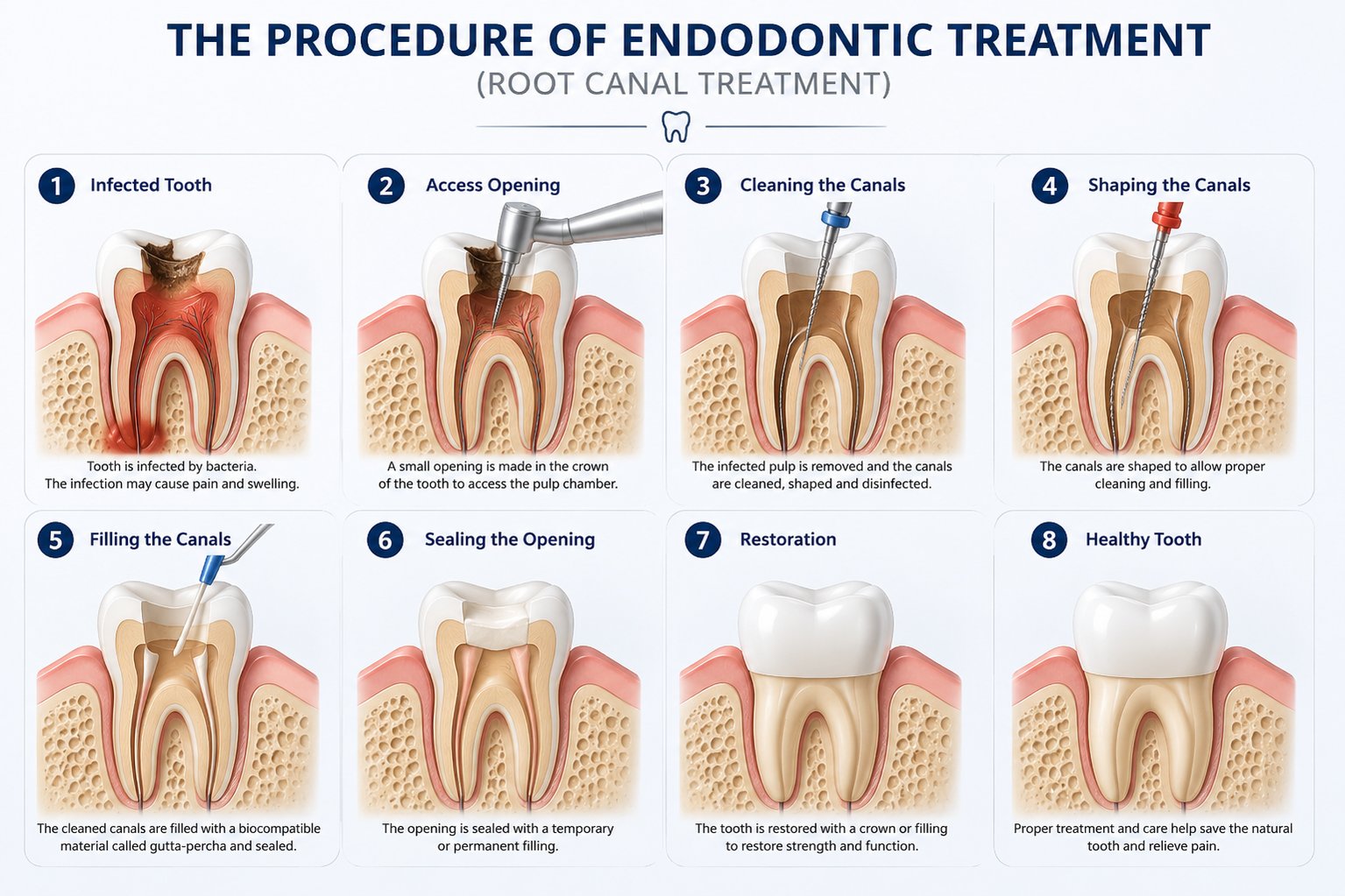
Root canal treatment is performed under local anesthesia. A thin sheet of rubber, called a rubber dam, is placed in the mouth to isolate the tooth. The dentist removes any tooth decay and makes an opening through the natural crown of the tooth into the pulp chamber. Creating this access also relieves the pressure inside the tooth and can dramatically ease pain.
The dentist determines the length of the root canals, usually with a series of x rays. Small wire-like files are then used to clean the entire canal space of diseased pulp tissue and bacteria. The debris is flushed out with large amounts of water (irrigation). The canals are also slightly enlarged and shaped to receive an inert (non-reactive) filling material called gutta percha. However, the tooth is not filled and permanently sealed until it is completely free of active infection. Once the canals are completely clean, they are filled with gutta percha and a sealer cement to prevent bacteria from entering the tooth in the future.
No longer have to wonder whether after root canal treatment will cause tooth pain again or not. because root canal treatment teeth The nerve of the tooth will be removed, so there will be no more pain. Endodontic treatment has obvious advantages that can preserve the teeth for further use and is better than dentures. This is because root canal teeth, like other teeth in the mouth, have a bony socket to hold the teeth strong and provide a better feel than dentures.
COMPLICATIONS
- For the first few days after treatment, your tooth may feel sensitive, especially if there was pain or infection before the procedure. Because of the infected nature of the abscess there can be some discomfort or swelling. This will be controlled with antibiotics and anti-inflammatories as needed. This discomfort can be relieved with over-the-counter or prescription medications. Follow your endodontist’s instructions carefully.
- Your tooth will feel sensitive to biting pressure. This feeling is a result of the nerve endings in the tissue outside the end of the root where it was cleaned, irrigated and a filler or sealer material was placed.
- Also, you might feel a rough area where access was made by your Endodontist. There is a soft, temporary material in that area, which may appear to wear away to some degree before your next dental visit.
- Your tooth may continue to feel slightly different from your other teeth for some time after your endodontic treatment is completed. However, if you have severe pain or pressure or pain that lasts more than a few days, call your endodontist.
SPECIAL CARE AFTER ENDODONTIC TREATMENT
Once the root canal treatment has been completed, you should consider the following: Brittleness a non-vital (endodontically treated) tooth is more brittle than a vital one and is more susceptible to fracture. Placing a suitable final restoration is almost as important as the root treatment itself. If the restoration leaks bacteria can migrate down the side of the root sealer and re-infect the tooth. In most cases, we recommend that your root canal tooth be crowned (gold or porcelain crown) following treatment.
Loss of tooth structure from dental caries (cavities), prior fillings, and endodontic care frequently results in weakening of the tooth. Teeth which are structurally weakened are prone to fracture, which can lead to tooth loss. A special restoration called a post-and-core is commonly needed to reinforce weakened teeth and a good way to insure against a serious fracture is to crown the tooth.
Discoloration you may notice that your endodontically treated tooth (especially a front tooth) has undergone a change in color. Though this discoloration is of no medical concern, you may be interested in having the teeth whitening. Be sure to ask us about Tooth Whitening if we do not decide to place a crown on the tooth.
FAQ : Endodontics
Q: What is Root Canal Treatment?
A: is the removal of the tooth nerve and the pulp in the infected tooth cavity to relieve pain or save a tooth.
Q: How long can a tooth survive after root canal?
A: Teeth that have been treated or rehabilitated can stay alive if proper care is observed.
Q: What are the common signs Root Canal is needed?
A: These are symptoms to watch out for:
- Severe toothache
- Intolerable sensitivity to cold or hot
- Darkening of tooth
- Swelling of gums
- Persistent pain or swelling